
Liquid LSD vs Blotter LSD Differences: Guide to Understanding Both Forms

Liquid LSD vs Blotter LSD Differences – Which Form Should You Know About?
When exploring psychedelic substances for educational purposes, understanding the liquid LSD vs blotter LSD differences becomes important for researchers, harm reduction advocates, and those interested in psychedelic science. These two forms represent the most common ways this substance appears, each with distinct characteristics that affect storage, dosing, and identification.
What Are the Main Forms of LSD?
LSD (lysergic acid diethylamide) typically appears in several forms, but liquid and blotter paper represent the two most prevalent formats. Each form has unique properties that influence how the substance is stored, measured, and consumed.

The chemical composition remains identical regardless of the delivery method, but the practical differences between these forms can be significant for various reasons including storage requirements, dosage accuracy, and detection methods.
Understanding Liquid LSD
Liquid LSD consists of the active compound dissolved in a solvent, most commonly distilled water or ethyl alcohol. This form offers several distinct characteristics:
Physical Properties
- Clear, colorless liquid that’s virtually odorless
- Can be stored in small dropper bottles
- Highly concentrated with doses measured in drops
- Sensitive to light, heat, and air exposure
Common Storage Methods
- Small amber glass bottles with dropper caps
- Breath mint containers
- Eye drop bottles
- Vials with precise measurement capabilities
Advantages of Liquid Form
- Precise dosing control: Users can measure exact amounts more easily
- Faster onset: Liquid form may be absorbed more quickly
- Versatility: Can be added to beverages or applied to various surfaces
- Concentration: Small volumes can contain multiple doses
Disadvantages of Liquid Form
- Storage challenges: Requires proper containers and conditions
- Measurement difficulties: Without proper tools, dosing can be inconsistent
- Shorter shelf life: More susceptible to degradation than paper forms
- Transportation issues: Liquid forms face more scrutiny and detection risks
Understanding Blotter LSD
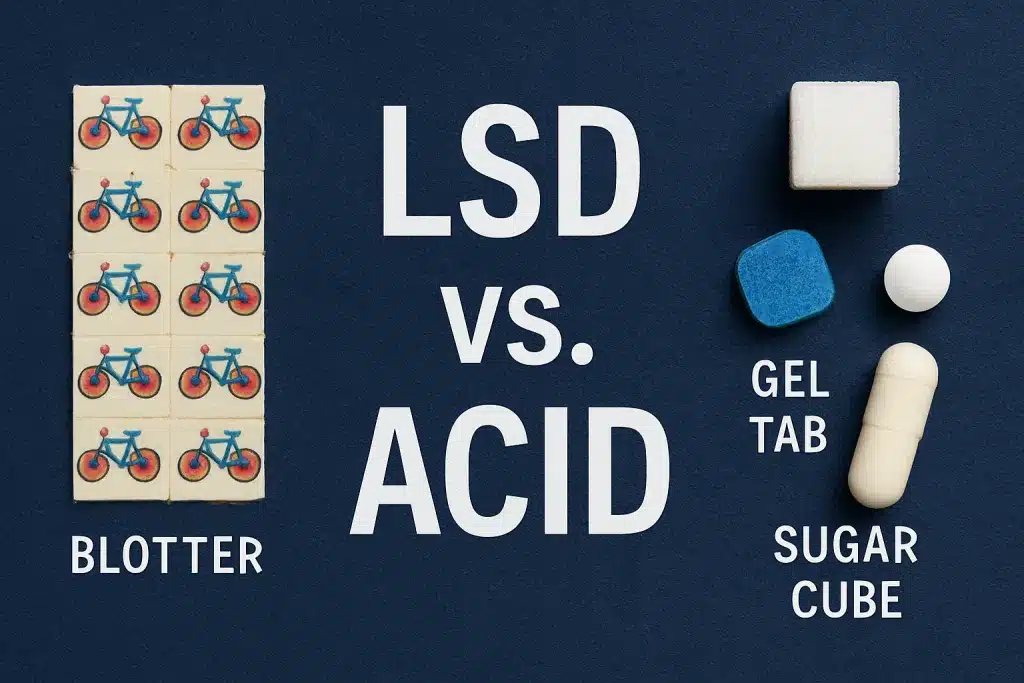
Blotter LSD involves the substance being absorbed into perforated paper sheets, creating individual tabs or squares. This method has been popular since the 1960s and remains widely recognized.\

Physical Characteristics
- Small paper squares, typically 1/4 inch in size
- Often decorated with colorful artwork or designs
- Perforated for easy separation
- Paper feels slightly thicker than regular paper due to absorption
Common Blotter Designs
- White on white: Plain white paper without designs
- Printed artwork: Various images, patterns, or symbols
- Gel tabs: Gelatin squares instead of paper
- Microdots: Small tablets containing the substance
Advantages of Blotter Form
- Easy storage: Flat, lightweight, and compact
- Pre-measured doses: Each tab typically contains a standard amount
- Stability: Paper form offers better protection from degradation
- Discrete appearance: Looks like decorative paper to untrained eyes
Disadvantages of Blotter Form
- Fixed dosing: Difficult to adjust dose sizes once prepared
- Uneven distribution: Substance may not be evenly spread across paper
- Paper quality factors: Different papers absorb and hold substances differently
- Artwork identification: Distinctive designs can aid in tracking and identification
Key Differences Between Liquid and Blotter LSD
Understanding the liquid LSD vs blotter LSD differences requires examining multiple factors that distinguish these forms:

Concentration Levels
- Liquid: Can vary dramatically, from very weak to extremely concentrated
- Blotter: Generally more standardized, though still variable between sources
Measurement Accuracy
- Liquid: Allows for micro-adjustments in dosing with proper equipment
- Blotter: Fixed doses per tab, though tabs can be divided
Onset Time Differences
- Liquid: Typically faster absorption, effects may begin sooner
- Blotter: Standard onset time, absorption through saliva and stomach
Duration Variations
Both forms produce similar duration effects, lasting 8-12 hours typically, with minimal difference in timeline between the two formats.
Storage and Shelf Life Comparison
Proper storage significantly affects the longevity and potency of both forms, but requirements differ:
Liquid LSD Storage Requirements
- Temperature: Cool, consistent temperatures below 70°F
- Light protection: Dark containers or storage areas
- Air exposure: Sealed containers to prevent oxidation
- Container material: Glass preferred over plastic
Blotter LSD Storage Requirements
- Moisture control: Dry environments prevent degradation
- Temperature stability: Cool, consistent conditions
- Light protection: Foil wrapping or dark storage
- Pressure protection: Avoid crushing or folding
Degradation Factors
Both forms degrade when exposed to:
- Ultraviolet light
- High temperatures
- Moisture and humidity
- Chlorinated water
- Extended air exposure
Dosage Control and Measurement
The liquid LSD vs blotter LSD differences become most apparent when examining dosage control methods:
Liquid Dosing Methods
- Drop counting: Standard method using consistent drop sizes
- Volumetric measurement: Using syringes or micropipettes for precision
- Dilution techniques: Creating weaker solutions for micro-dosing
- Surface application: Applying drops to sugar cubes or other mediums
Blotter Dosing Approaches
- Full tabs: Taking complete squares as intended
- Tab division: Cutting or tearing for smaller doses
- Multiple tabs: Combining for higher doses
- Sublingual placement: Holding under tongue for absorption
Measurement Challenges
- Liquid inconsistency: Drop sizes vary based on dropper type and technique
- Blotter variability: Uneven distribution across paper surfaces
- Concentration unknowns: Difficulty determining actual substance content
- Degradation effects: Potency loss over time affects dosing accuracy
Detection and Testing Methods
Both forms can be identified through various testing approaches, though methods may differ:

Visual Identification
- Liquid: Clear, colorless appearance with no distinctive visual markers
- Blotter: Often recognizable artwork or patterns aid identification
Chemical Testing
- Reagent tests: Ehrlich and Hofmann reagents work for both forms
- Laboratory analysis: Mass spectrometry and chromatography provide definitive results
- Field testing: Portable test kits available for both formats
Detection Challenges
- Liquid advantages: Less visually distinctive, easier to disguise
- Blotter advantages: Artwork can provide tracking information for law enforcement
- Quantity assessment: Liquid concentration harder to estimate visually
Legal Considerations
Both liquid and blotter forms face identical legal classifications in most jurisdictions:
United States Legal Status
- Federal classification: Schedule I controlled substance
- State variations: Some states have specific penalties for different forms
- Quantity considerations: Legal consequences often based on total weight
International Legal Framework
- UN Convention: Classified under international drug control treaties
- Country variations: Individual nations may have specific penalties
- Research exceptions: Some jurisdictions allow approved research
Legal Penalties
- Possession charges: Similar for both forms in most areas
- Distribution penalties: Often calculated by dose count or total weight
- Manufacturing charges: Severe penalties regardless of final form
Safety and Harm Reduction
Understanding the liquid LSD vs blotter LSD differences supports safer practices for those who encounter these substances:
Purity Testing Importance
- Unknown substances: Both forms may contain adulterants or completely different chemicals
- Cross-contamination: Manufacturing processes can introduce harmful compounds
- Substitution risks: Other substances sometimes sold as LSD
Dosage Safety Considerations
- Start low principle: Begin with small amounts regardless of form
- Set and setting: Environment and mindset affect experiences significantly
- Medical considerations: Various health conditions and medications create risks
Emergency Preparedness
- Recognition signs: Identifying adverse reactions early
- Support systems: Having trusted individuals available during use
- Medical resources: Knowing when and how to seek professional help
Harm Reduction Resources
- Testing services: Organizations providing substance analysis
- Educational materials: Science-based information about effects and risks
- Support networks: Communities focused on safety and education
Frequently Asked Questions
Which form is more potent?
Potency depends on concentration rather than format. Both liquid and blotter can range from very weak to extremely strong depending on preparation methods.
How long do the effects last for each form?
Both forms typically produce effects lasting 8-12 hours, with minimal difference in duration based on delivery method.
Which form degrades faster?
Liquid forms generally degrade more quickly due to increased exposure to air, light, and contamination, while properly stored blotter paper maintains potency longer.
Can you convert between forms?
Yes, liquid can be applied to paper to create blotter tabs, though this process requires careful measurement and even distribution.
Which form is easier to dose accurately?
Liquid allows for more precise micro-adjustments, while blotter provides more consistent pre-measured doses, each having advantages depending on the situation.
The liquid LSD vs blotter LSD differences extend beyond simple physical characteristics to include practical considerations around storage, dosing, identification, and safety. Whether encountered in research settings, harm reduction contexts, or legal proceedings, understanding these distinctions provides valuable knowledge for various professional and educational purposes. Both forms carry identical legal status and health considerations, making education and awareness crucial for anyone who might encounter these substances in their professional or personal contexts.
For those working in healthcare, law enforcement, harm reduction, or research fields, recognizing these differences supports better decision-making and more effective interventions when needed. The scientific community continues studying these substances for their potential therapeutic applications, making accurate information about different forms increasingly important for legitimate research purposes.
Liquid LSD vs Blotter LSD Differences | Liquid LSD vs Blotter LSD Differences Liquid LSD vs Blotter LSD Differences | Liquid LSD vs Blotter LSD Differences | Liquid LSD vs Blotter LSD Differences | Liquid LSD vs Blotter LSD Differences | Liquid LSD vs Blotter LSD Differences | Liquid LSD vs Blotter LSD Differences | Liquid LSD vs Blotter LSD Differences